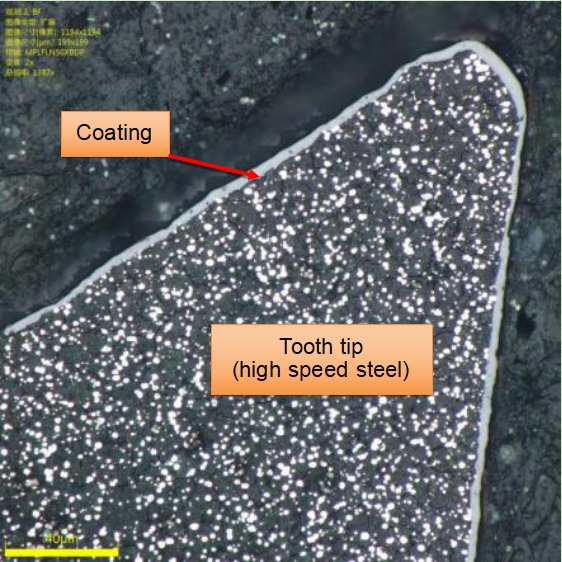
Troubleshooting Guide: Expert Solutions for Band Saw Blade Failures
As a factory with 30 years of manufacturing excellence, WOKELI is dedicated to helping global customers maximize cutting efficiency. This guide analyzes 8 common failure causes and provides expert technical remedies.
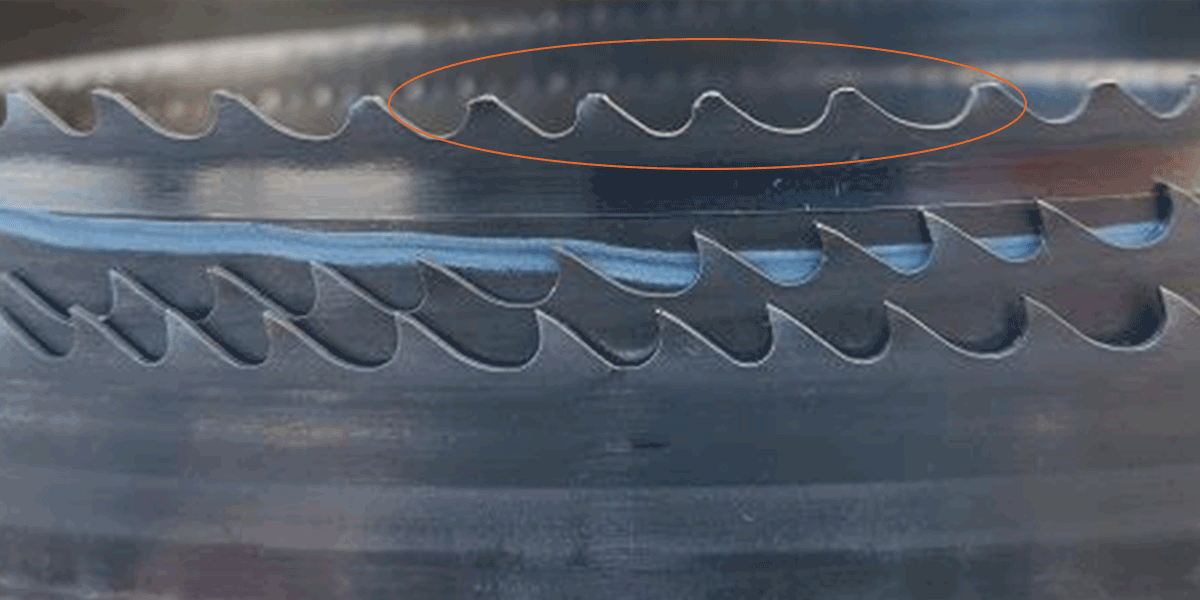
1. Tooth Stripping
Failure Analysis: Excessive feed rate forces the cutting load beyond the tooth tip’s strength. Alternatively, an incorrect TPI (Teeth Per Inch) selection leads to tooth overcrowding in the material thickness.
WOKELI Expert Solution: Strictly execute the 20-minute “Break-in” procedure at 50% feed rate. Ensure at least 3 to 6 teeth are engaged in the cut at all times.
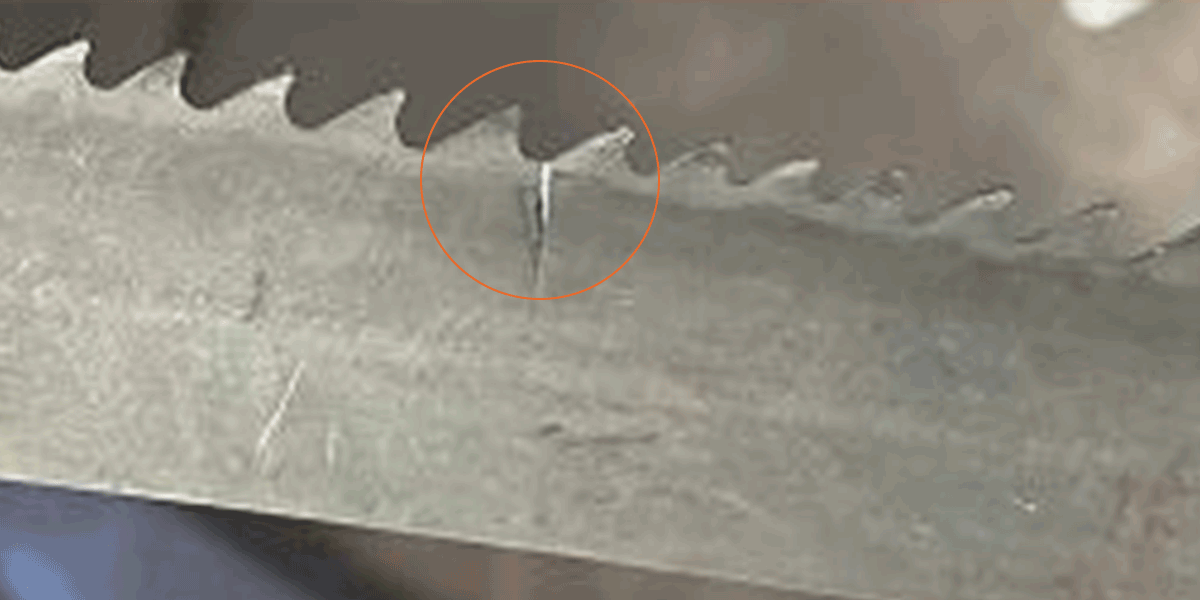
2. Cracks in Gullet
Failure Analysis: Excessive blade tension or misaligned guide blocks create high fatigue stress at the base of the tooth gullet, leading to hairline fractures.
WOKELI Expert Solution: Periodically calibrate your tension gauge. For M42 Bi-metal blades, maintain tension between 30,000–35,000 PSI.
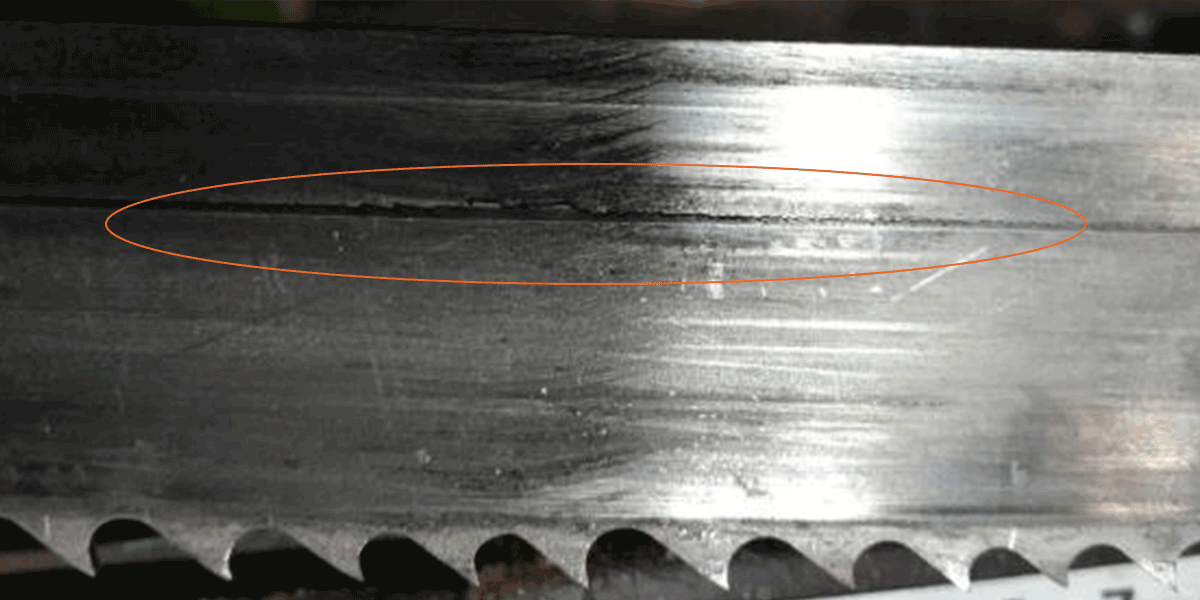
3. Scoring on Blade Back
Failure Analysis: Worn or seized thrust bearings (backup bearings) cause severe friction against the non-toothed edge of the blade during the cutting stroke.
WOKELI Expert Solution: Inspect and replace damaged guide bearings immediately. Ensure the blade is tracking correctly and not pressing aggressively against the bearing flange.
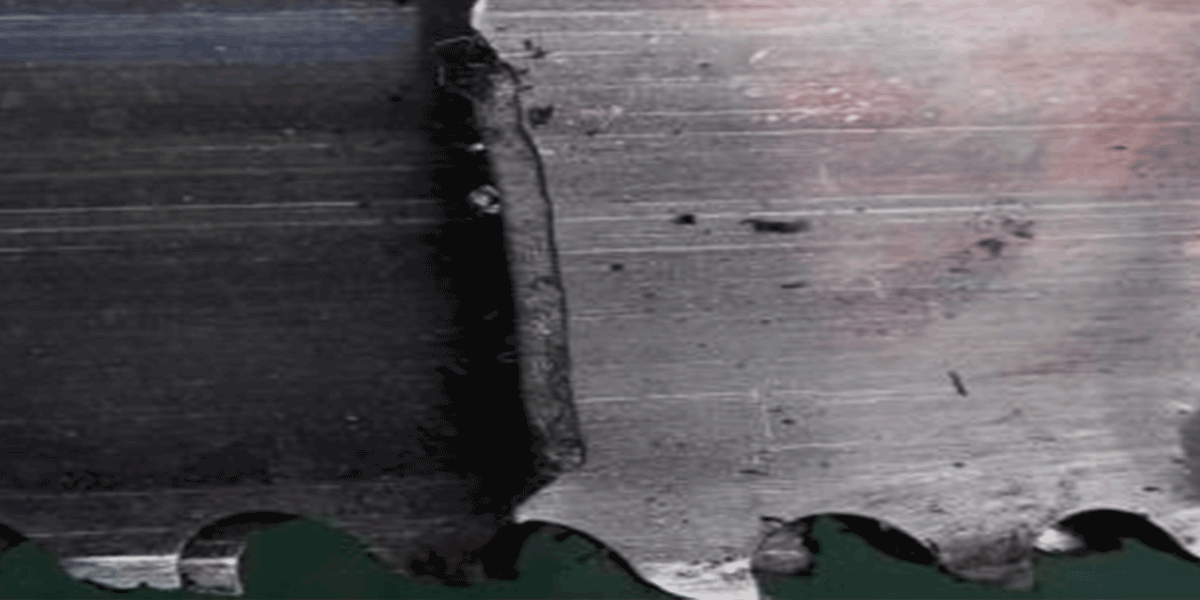
4. Fracture at Weld
Failure Analysis: Improper annealing during the welding process or excessive flexural stress caused by undersized machine wheels relative to blade thickness.
WOKELI Expert Solution: Use precision flash-butt welded blades. Verify that your machine’s wheel diameter is compatible with the blade gauge to prevent fatigue.
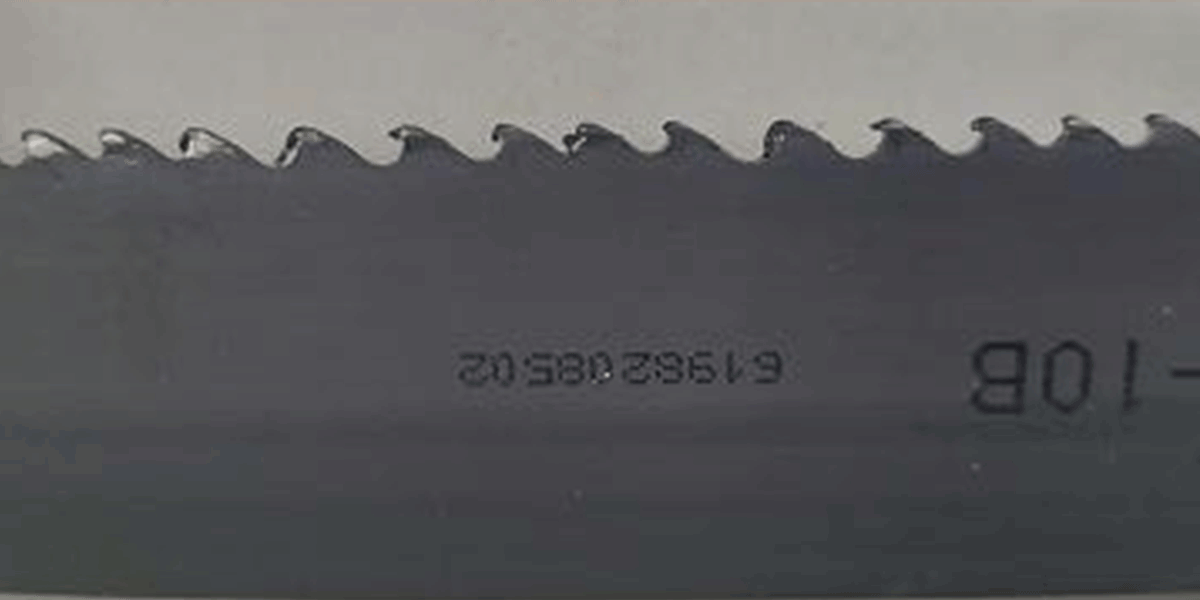
5. Chips Welded to Teeth (Built-up Edge)
Failure Analysis: Inadequate coolant flow or improper mix ratio fails to dissipate heat, causing metal chips to melt and fuse to the tooth tips.
WOKELI Expert Solution: Increase coolant volume and ensure nozzles are directed precisely at the cutting point. Clean chip brushes daily.
6. Crooked Cutting / Deflection
Failure Analysis: Excessive feed pressure causes lateral blade bending. This is often compounded by excessive spacing between guide arms or uneven tooth wear.
WOKELI Expert Solution: Minimize the distance between guide arms. Check the machine’s vertical alignment and reduce feed pressure for difficult materials.
7. Vibration & Excessive Noise
Failure Analysis: Harmonic resonance occurs when band speed is mismatched with material density, or when the workpiece is not clamped securely.
WOKELI Expert Solution: Adjust band speed (SFPM). For solid bars, utilize Variable Pitch (VP) blades to interrupt resonance and dampen vibration.
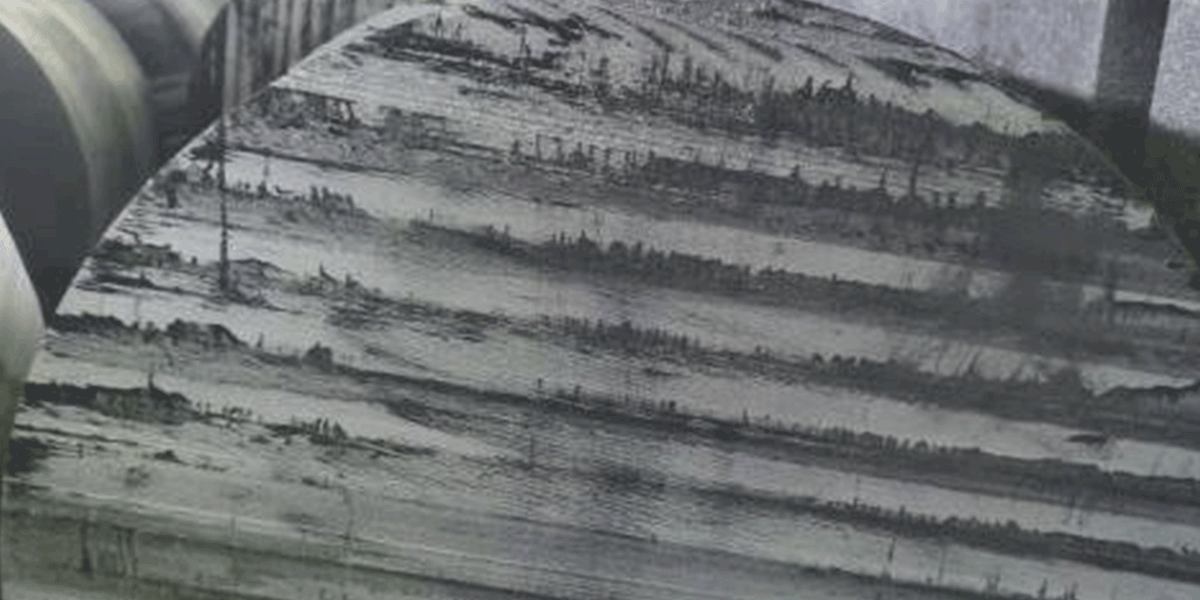
8. Premature Dulling
Failure Analysis: High band speeds generate extreme friction heat, softening the tooth edge. Also caused by cutting through hardened surface scales without reducing initial pressure.
WOKELI Expert Solution: Lower the line speed according to the material hardness chart. WOKELI M42 Bi-metal blades offer superior heat resistance for extended tool life.
Facing Complex Cutting Challenges?
Our technical engineers provide one-on-one consultations backed by 30 years of industrial experience.